The Ability to Read is Unnatural
“Once you learn to read, you will forever be free.” – Frederick Douglass
Why does learning to read bring many children (and parents) to tears? Simply put, unlike many other abilities, the human brain has no natural reading function. Reading requires a combined effort by the brain’s visual cortex and language center. This skill is not one that can be learned in one sitting…or overnight…or in a few weeks. It takes children years to build the necessary background knowledge, basic language structure abilities, and recognition of letter and word shapes – not to mention several other foundational competencies.
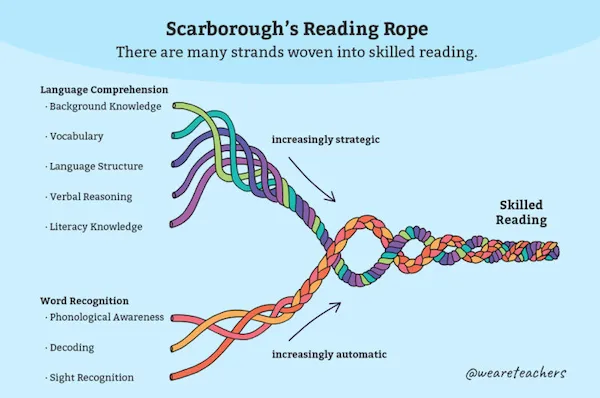
This complex process is beautifully visualized by Scarborough’s Rope. Each skill is represented by its own strand of knowledge which must weave together to fully develop a child’s visual and speech centers and eventually bridge these separate sections of the brain before reading is possible.

Think of it this way: have you ever tried learning a foreign language that does not use your native alphabet? Did you instantly recognize the characters and context for what they are? If you answered yes…I like your sense of humor.
The fact is that we are asking children, sometimes as young as 3-years-old, to accomplish a monumental task and they need direct support from educators and parents in their learning efforts. Reading may in fact be the most important skill they learn in their lifetime, with strength in literacy correlating to both academic success and future earning capabilities.
Sadly, literacy rates in the U.S. have been on the decline for years. Nearly 70% of 4th graders are reading below grade-level. Through a combination of misguided policy placing standardized testing over information retention and a global pandemic, educators and children have been left to struggle with reading.
However, there is a light at the end of the tunnel. Literacy centers and private reading coaching are now more accessible than ever. Even better, more of these resources are using play-based learning that follows the Science of Reading. Decades of research have provided strong evidence on the most effective ways to assess, teach, and enhance reading skills. While the public school system is beginning to adopt Science of Reading curricula, implementing change will be a slow process. Supplemental learning resources can empower families to take control of literacy education for their children now.
If you know a child who struggles with reading, I want to help! Let’s turn their reading journey into an adventure they look forward to, together. Contact Expedition Read to book your FREE reading assessment today!


